Whimsical Summer Woodland Animals: A Designer’s Guide to Forest Charm
There’s a certain magic in a sun-dappled forest, a feeling of gentle wonder and quiet life. Capturing that essence in a design project can be challenging, but the right visual assets make all the difference. This is where the Whimsical Summer Woodland Animals clipart collection comes in. It’s not just a set of cute illustrations; it’s a toolkit for injecting a specific, heartfelt mood into your work—a blend of cottagecore nostalgia, storybook innocence, and natural elegance. As a designer or creator, understanding how to leverage such a distinct style is key to building cohesive and emotionally resonant projects.
Anatomy of a Whimsical Aesthetic
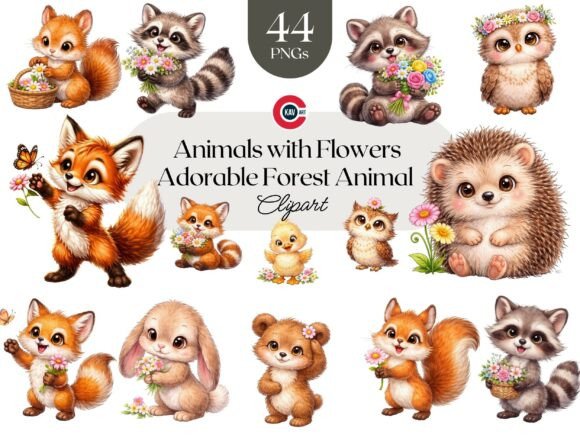
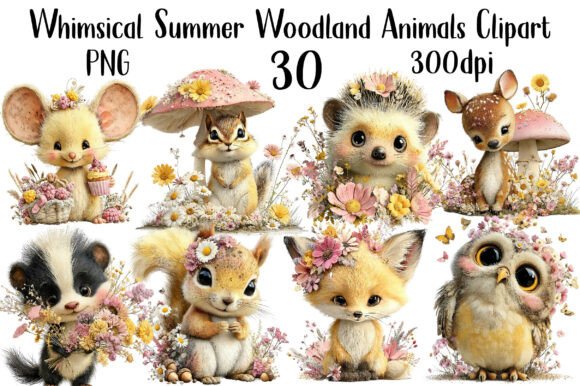
Let’s break down what defines this collection. The term “whimsical” here is intentional. It suggests a departure from rigid realism into a softer, more personalized interpretation of nature. The illustrations feature familiar woodland creatures—foxes, deer, owls, and hedgehogs—but each is rendered with a gentle, almost playful personality. They aren’t posed in dramatic, realistic stances; instead, they’re often interacting with their environment in a sweet, curious way.
The visual style is distinctly soft watercolor whimsical. This means you’ll see soft edges, subtle color bleeds, and a texture that mimics traditional media. The color palette leans into warm, natural tones: earthy browns, mossy greens, soft pinks, and sunny yellows. Crucially, each animal is adorned with delicate floral and nature elements—think tiny mushrooms, sprigs of lavender, or clusters of wildflowers integrated into their fur or antlers. This detail transforms them from simple animal portraits into little vignettes of a magical forest ecosystem. The result is a collection that feels handcrafted and intimate, far removed from generic, flat vector art.
Practical Applications: Beyond the Greeting Card
While the immediate thought for such charming graphics might be greeting cards or nursery decor, their utility spans a much broader range of professional and personal projects. The key is to match the asset’s personality with the project’s goal. For a small business owner creating a brand identity for an artisanal soap company, a local florist, or a children’s boutique, these illustrations can form the cornerstone of a logo design and visual language. They communicate values of craftsmanship, nature, and care.
In editorial design and publishing, they can elevate a blog post about mindfulness, a magazine feature on gardening, or the chapter headers of a self-published book on herbal remedies. For packaging design, imagine these creatures on a tea box, a jar of honey, or a candle label—instantly conveying a natural, premium product. The digital realm is equally fertile ground. Use them to create engaging social media graphics for a wellness brand, as custom stickers in a messaging app, or as charming icons for a nature-themed website. For crafters and hobbyists, the applications are nearly endless: sublimation printing on tote bags, heat transfers for t-shirts, custom planner stickers, and intricate scrapbooking layouts.
Integrating Whimsy into a Professional Workflow
Using a creative font or asset like this effectively requires more than just pasting it onto a canvas. Consider the principles of visual hierarchy and brand perception. These illustrations are detailed and expressive, so they naturally draw the eye. Use them as focal points rather than background noise. Pair them with simpler design elements to avoid visual clutter. A clean, modern sans serif font for body text can provide a beautiful contrast, letting the whimsical art shine without competing for attention.
Think about font pairing in a broader sense. If your project uses typography, choose typefaces that complement, not clash. A delicate script font or a gentle serif font can echo the elegance of the watercolor style, while a bold, geometric display font might create an interesting tension that feels contemporary. The goal is consistency in mood. Every element, from the illustrations to the color scheme to the typography, should tell the same story. This cohesive approach builds brand recognition and professionalism, making your work feel intentional and trustworthy.
Making the Most of Your Design Assets
When working with a collection like Whimsical Summer Woodland Animals, a few practical considerations will streamline your process. First, understand the files you receive. The 30 high-resolution PNGs with transparent backgrounds are incredibly versatile. They can be scaled, rotated, and layered without worrying about clashing backgrounds. This is a significant advantage for both print and digital work, from Cricut & Silhouette projects to complex Photoshop composites.
Always test how the graphics interact with your color palette. While the illustrations have their own inherent colors, you can often adjust the background or surrounding elements to create harmony or pleasing contrast. For commercial use, review the licensing terms carefully to ensure your specific application is covered. Finally, don’t be afraid to use these assets selectively. Sometimes, a single, well-placed squirrel or a cluster of illustrated mushrooms is more powerful than using every creature in the set. It’s about curating a feeling, not just decorating a space. This thoughtful application is what separates good design from great design, turning a charming clipart set into a powerful tool for visual storytelling.